Sunday, February 24, 2013
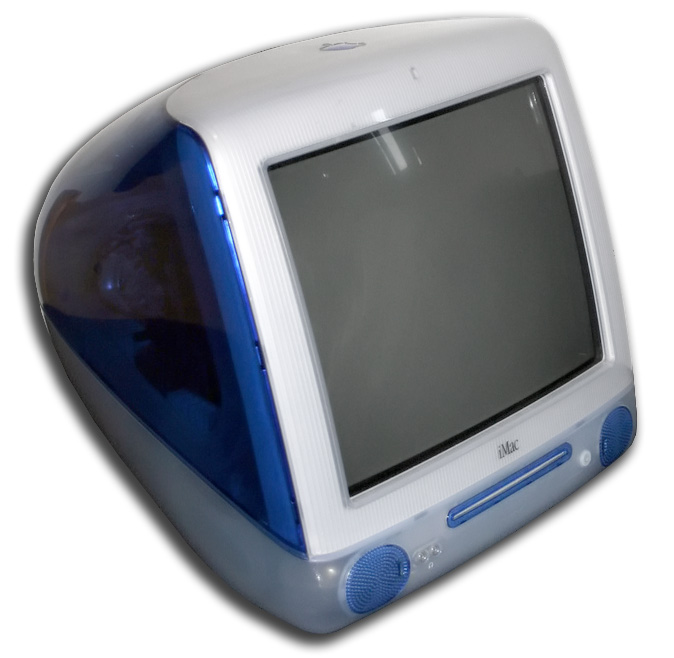
iMac G3
iMac G3 has a really cool design with a translucent and brightly-colored plastics. The original iMac had a 233 MHz PowerPC G3 (PowerPC 750) chip, with 512 KB L2 cache running at 116.6 MHz, which also ran in Apple's high-end Power Macintosh line at the time, though at higher speeds, with more expensive models shipping with 1 MB L2 cache. It had a 4 GB hard drive, 32 MB RAM, 2 MB video RAM, and shipped with Mac OS 8.1, which was soon upgraded to Mac OS 8.5.
Monday, February 18, 2013
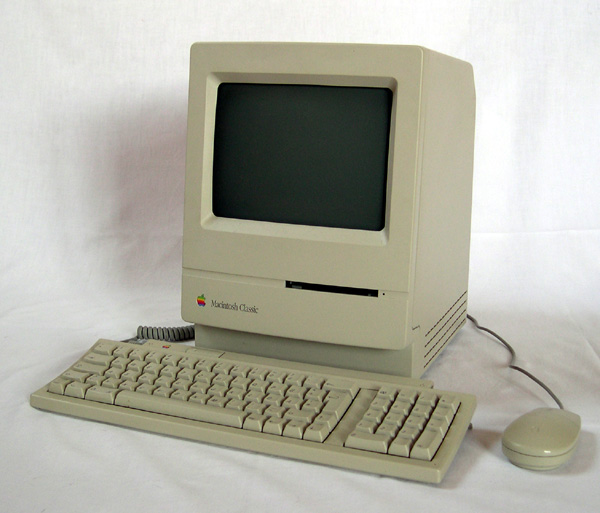
Macintosh Classic
I had one of this back in the days, though it's limited the system is pretty tough and useful. It has a 9-inch (23 cm) monochrome CRT display, 512×384 pixel resolution, and 4 megabyte (MB) memory limit of the older Macintosh computers. Apple's decision to not update the Classic with newer technology such as a 68010 CPU, higher RAM capacity or color display ensured compatibility with the Mac's by-then healthy software base as well as enabled it to fit the lower price-point Apple intended for it. Nevertheless, the Classic featured several improvements over the aging Macintosh Plus, which it replaced as Apple's low-end Mac computer. It was up to 25 percent faster than the Plus and included an Apple SuperDrive 3.5-inch (9 cm) floppy disk drive as standard.
Wednesday, February 13, 2013
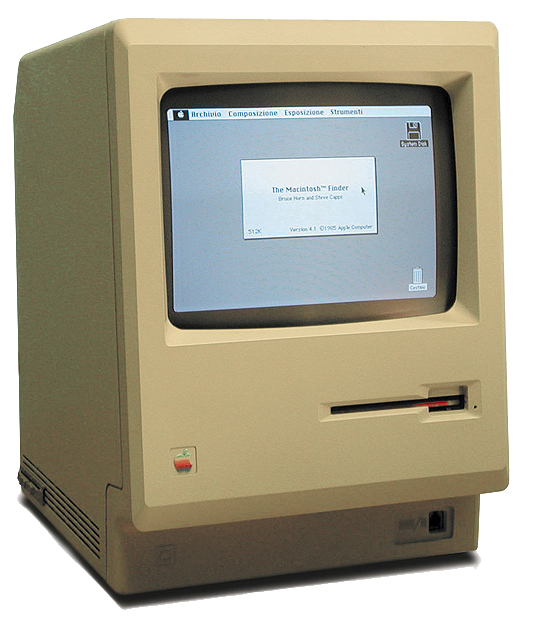
Macintosh 128K
This one takes you back in time in the 1980s. Macintosh 128K or "Apple Macintosh" is the original Apple Macintosh personal computer.
Its beige case contained a 9 in (23 cm) monitor and came with a keyboard and mouse. A handle in the top of the case made it easier for the computer to be lifted and carried.
The machine was powered by a Motorola 68000 microprocessor connected to a 128 kB DRAM by a 16-bit data bus. Lack of RAM proved to be a fatal constraint to much multimedia software, and it could not be upgraded. A 64 kB ROM chip boosted the effective memory to 192 kB, but this is offset by the display's 22 kB framebuffer, which is shared with the DMA video controller.
The 68000 and video controller take turns accessing DRAM every four CPU cycles during display of the frame buffer, while the 68000 has unrestricted access to DRAM during vertical and horizontal blanking intervals. Such an arrangement reduces the overall performance of the CPU as much as 35% for most codes as the display logic often blocks the CPU's access to RAM. This made the machine appear to run more slowly than several of its competitors, despite the nominally high clock rate.
Friday, February 1, 2013
BASIC language
BASIC (Beginner's All-purpose Symbolic Instruction Code) is a family of general-purpose, high-level programming languages whose design philosophy emphasizes ease of use.
The original BASIC language is designed by John George Kemeny and Thomas Eugene Kurtz in 1964 at Dartmouth College in New Hampshire. They wanted to enable students in fields other than science and mathematics to use computers. At the time, nearly all use of computers required writing custom software, which was something only scientists and mathematicians tended to do.
Versions of BASIC became widespread on microcomputers in the mid-1970s and 1980s. Microcomputers usually shipped with BASIC, often in the machine's firmware. Having an easy-to-learn language on these early personal computers allowed small business owners, professionals, hobbyists, and consultants to develop custom software on computers they could afford.
BASIC remains popular in many dialects and in new languages influenced by BASIC, such as Microsoft's Visual Basic. In 2006, 59% of developers for the .NET Framework used Visual Basic .NET as their only programming language.
The original BASIC language is designed by John George Kemeny and Thomas Eugene Kurtz in 1964 at Dartmouth College in New Hampshire. They wanted to enable students in fields other than science and mathematics to use computers. At the time, nearly all use of computers required writing custom software, which was something only scientists and mathematicians tended to do.
Versions of BASIC became widespread on microcomputers in the mid-1970s and 1980s. Microcomputers usually shipped with BASIC, often in the machine's firmware. Having an easy-to-learn language on these early personal computers allowed small business owners, professionals, hobbyists, and consultants to develop custom software on computers they could afford.
BASIC remains popular in many dialects and in new languages influenced by BASIC, such as Microsoft's Visual Basic. In 2006, 59% of developers for the .NET Framework used Visual Basic .NET as their only programming language.
Subscribe to:
Comments (Atom)