Michael Dell has finally clinched shareholders' approval for his $25 billion offer to buy and take Dell private, ending months of bitter conflict with the company's largest investors.
The company plans to invest in the PC and tablet markets, in expanding sales coverage, and in growing its distribution network, founder and chief executive Michael Dell said in a conference call after the shareholder vote.
The company's pace of internal transformation should now quicken. Sealing the deal should also assuage customers who have grown wary of the company's direction during a very public battle that pit major Wall Street players Icahn, Southeastern Asset Management and T. Rowe Price against the CEO.
"We still have a long way to go and many challenges to meet," the company founder said. "But under a new private company structure, we will have the flexibility to accelerate our strategy and pursue both organic and inorganic investment without the scrutiny, quarterly targets and other limitations of operating as a public company."
Read more: Dell promises PC resurgence as he finally wins battle to go private | News | PC Pro http://www.pcpro.co.uk/news/384184/dell-promises-pc-resurgence-as-he-finally-wins-battle-to-go-private#ixzz2em3gdfkN
Friday, September 13, 2013

Apple iMac 27-inch (Nvidia GeForce GTX 675M)

The Apple iMac 27-inch (Nvidia GeForce GTX 675M) ($3,099 direct) desktop is a compact powerhouse system with high-octane performance. It can be upgraded to 32GB of memory and a high-end third-generation Intel Core i7 processor.
It has a stunningly thin design and an impressive low-glare display.
The system has 32GB of DDR3 1,600-MHz memory, a third-generation Intel Core i7-3770 processor, 1GB Nvidia GeForce GTX 675MX discrete graphics, and 256GB of Flash Storage instead of a hard drive.
However, it has no internal upgradability. There is no HDMI-in or out without an adapter. You won't be able to adjust the height. And it needs external Thunderbolt drive for more storage.
HP Z230 SFF Workstation

This workstation is an excellent professional grade desktop PC for projects. Powered by Intel Xeon E3-1245 v3 processor. Nvidia Quadro K600 graphics. It also supports multiple monitors. It has an easy-open side panel that makes maintenance and repair easy.
The Three-year warranty is a great add-on. It has one open drive bay.
The HP Z230 SFF Workstation is perfect for the business user who wants a powerful, professional-grade system in a manageable form-factor.
Price Starting at $969
Sunday, February 24, 2013
iMac G3
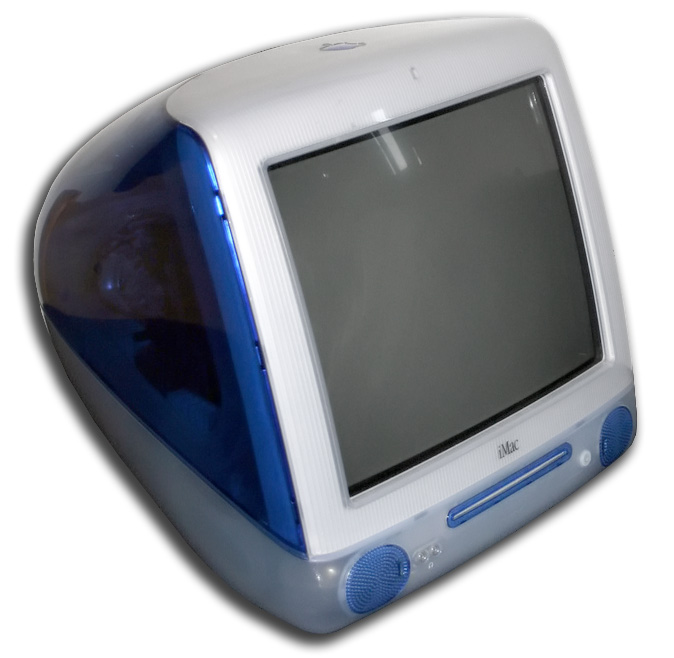
iMac G3 has a really cool design with a translucent and brightly-colored plastics. The original iMac had a 233 MHz PowerPC G3 (PowerPC 750) chip, with 512 KB L2 cache running at 116.6 MHz, which also ran in Apple's high-end Power Macintosh line at the time, though at higher speeds, with more expensive models shipping with 1 MB L2 cache. It had a 4 GB hard drive, 32 MB RAM, 2 MB video RAM, and shipped with Mac OS 8.1, which was soon upgraded to Mac OS 8.5.
Monday, February 18, 2013
Macintosh Classic
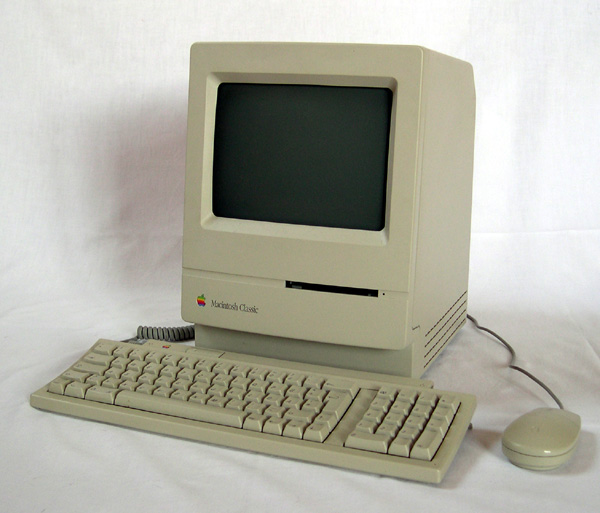
I had one of this back in the days, though it's limited the system is pretty tough and useful. It has a 9-inch (23 cm) monochrome CRT display, 512×384 pixel resolution, and 4 megabyte (MB) memory limit of the older Macintosh computers. Apple's decision to not update the Classic with newer technology such as a 68010 CPU, higher RAM capacity or color display ensured compatibility with the Mac's by-then healthy software base as well as enabled it to fit the lower price-point Apple intended for it. Nevertheless, the Classic featured several improvements over the aging Macintosh Plus, which it replaced as Apple's low-end Mac computer. It was up to 25 percent faster than the Plus and included an Apple SuperDrive 3.5-inch (9 cm) floppy disk drive as standard.
Wednesday, February 13, 2013
Macintosh 128K
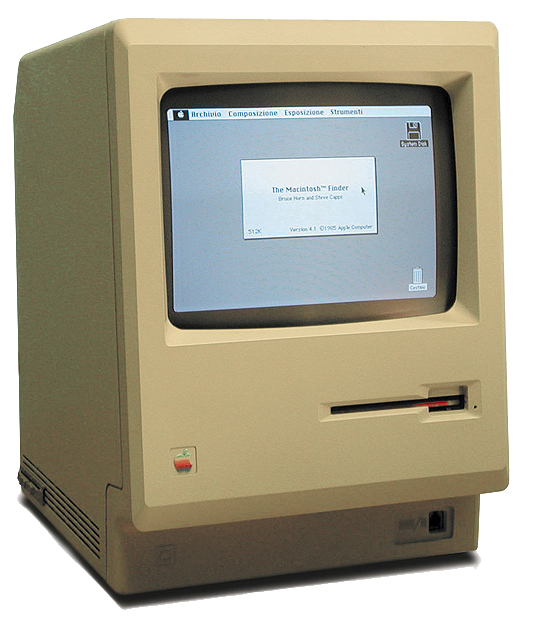
This one takes you back in time in the 1980s. Macintosh 128K or "Apple Macintosh" is the original Apple Macintosh personal computer.
Its beige case contained a 9 in (23 cm) monitor and came with a keyboard and mouse. A handle in the top of the case made it easier for the computer to be lifted and carried.
The machine was powered by a Motorola 68000 microprocessor connected to a 128 kB DRAM by a 16-bit data bus. Lack of RAM proved to be a fatal constraint to much multimedia software, and it could not be upgraded. A 64 kB ROM chip boosted the effective memory to 192 kB, but this is offset by the display's 22 kB framebuffer, which is shared with the DMA video controller.
The 68000 and video controller take turns accessing DRAM every four CPU cycles during display of the frame buffer, while the 68000 has unrestricted access to DRAM during vertical and horizontal blanking intervals. Such an arrangement reduces the overall performance of the CPU as much as 35% for most codes as the display logic often blocks the CPU's access to RAM. This made the machine appear to run more slowly than several of its competitors, despite the nominally high clock rate.
Friday, February 1, 2013
BASIC language
BASIC (Beginner's All-purpose Symbolic Instruction Code) is a family of general-purpose, high-level programming languages whose design philosophy emphasizes ease of use.
The original BASIC language is designed by John George Kemeny and Thomas Eugene Kurtz in 1964 at Dartmouth College in New Hampshire. They wanted to enable students in fields other than science and mathematics to use computers. At the time, nearly all use of computers required writing custom software, which was something only scientists and mathematicians tended to do.
Versions of BASIC became widespread on microcomputers in the mid-1970s and 1980s. Microcomputers usually shipped with BASIC, often in the machine's firmware. Having an easy-to-learn language on these early personal computers allowed small business owners, professionals, hobbyists, and consultants to develop custom software on computers they could afford.
BASIC remains popular in many dialects and in new languages influenced by BASIC, such as Microsoft's Visual Basic. In 2006, 59% of developers for the .NET Framework used Visual Basic .NET as their only programming language.
The original BASIC language is designed by John George Kemeny and Thomas Eugene Kurtz in 1964 at Dartmouth College in New Hampshire. They wanted to enable students in fields other than science and mathematics to use computers. At the time, nearly all use of computers required writing custom software, which was something only scientists and mathematicians tended to do.
Versions of BASIC became widespread on microcomputers in the mid-1970s and 1980s. Microcomputers usually shipped with BASIC, often in the machine's firmware. Having an easy-to-learn language on these early personal computers allowed small business owners, professionals, hobbyists, and consultants to develop custom software on computers they could afford.
BASIC remains popular in many dialects and in new languages influenced by BASIC, such as Microsoft's Visual Basic. In 2006, 59% of developers for the .NET Framework used Visual Basic .NET as their only programming language.
Saturday, January 12, 2013
Hewlett-Packard 9100A

The Hewlett-Packard 9100A an early computer, first appearing in 1968. HP called it a desktop calculator because, as Bill Hewlett said, "If we had called it a computer, it would have been rejected by our customers' computer gurus because it didn't look like an IBM. We therefore decided to call it a calculator, and all such nonsense disappeared."
The 9100A was the first scientific calculator by the modern definition (i.e. trig, log/ln, and exponential functions), and was the beginning of Hewlett-Packard's long history of using reverse Polish notation entry on their calculators.
Tuesday, January 8, 2013
Programma 101
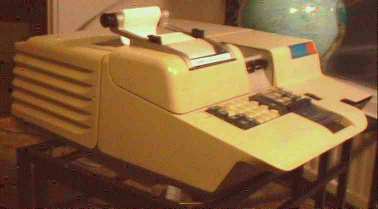
Programma 101 was the first commercial "desktop computer". It was produced by Italian manufacturer Olivetti and invented by the Italian engineer Pier Giorgio Perotto. It was launched at the 1964 New York World's Fair, volume production started in 1965. About 44,000 units were sold, primarily in the US. It is equipped with a 240 byte memory.
It is usually considered a printing programmable calculator or desktop calculator because three years later the Hewlett-Packard 9100A, a model that took inspiration from the P101, was advertised by HP as a "portable calculator", in order to be able to overcome the fears of computers and be able to sell it to corporations without passing through the corporate computer department.
Saturday, January 5, 2013
HP 9830A
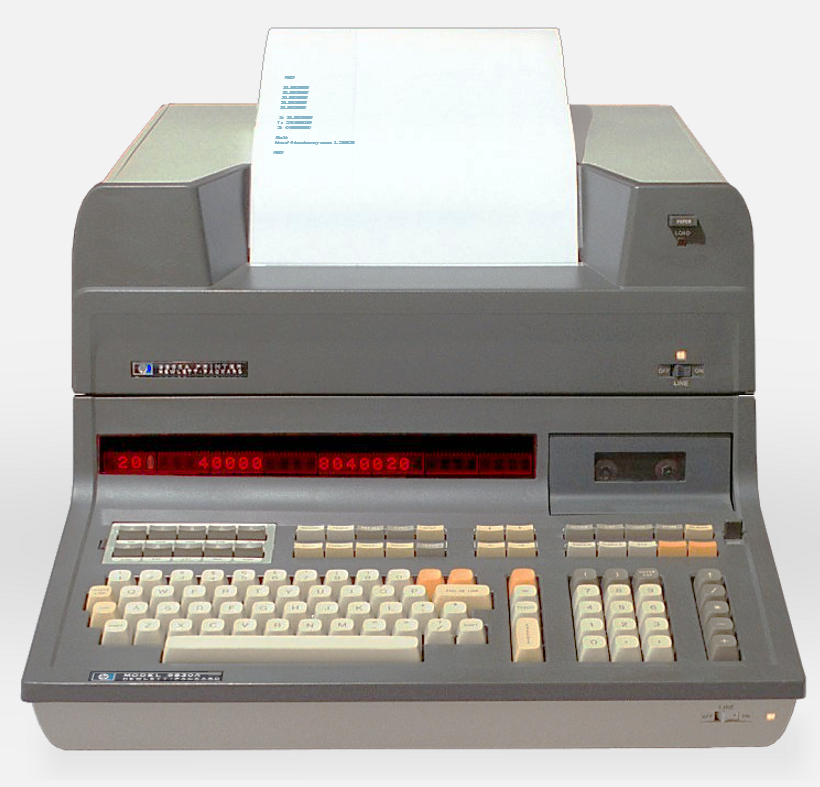
HP 9830A is a sophisticated programmable calculator, it's actually an early desktop computer with printer. It was introduced in 1972, was the top of the 9800 line; having BASIC interpreter in read-only memory (ROM). The model was discontinued late in the 1970s.
Run by operating system ROM BASIC, expandable with ROM cartridges. Powered by processor based on HP 2100 with stack. The system is also equipped with 16 kB ~ 64 kB memory.
All 98x0 and 9821 systems used the same I/O interfaces. A 400 line per minute 80-column thermal line printer was designed to fit on top of the 9820 and 9830.
Subscribe to:
Comments (Atom)